Case study · Two-sided marketplace
Making the Managed by Q marketplace self-service
Harrison Johnson, product manager · Design by Rebecca Erickson · Mar 2019 to Jan 2020
Office managers came to Managed by Q to book vendors: cleaners, handymen, IT, movers. In early 2019 our support team still did most of the matching, and a request could wait a full business day before a vendor saw it. Rebecca and I owned the rebuild end to end. We let customers pick their own vendor, and the share who did went from 11% to 83%. Then we turned the support option off.
Projects where the customer chose the vendor without support
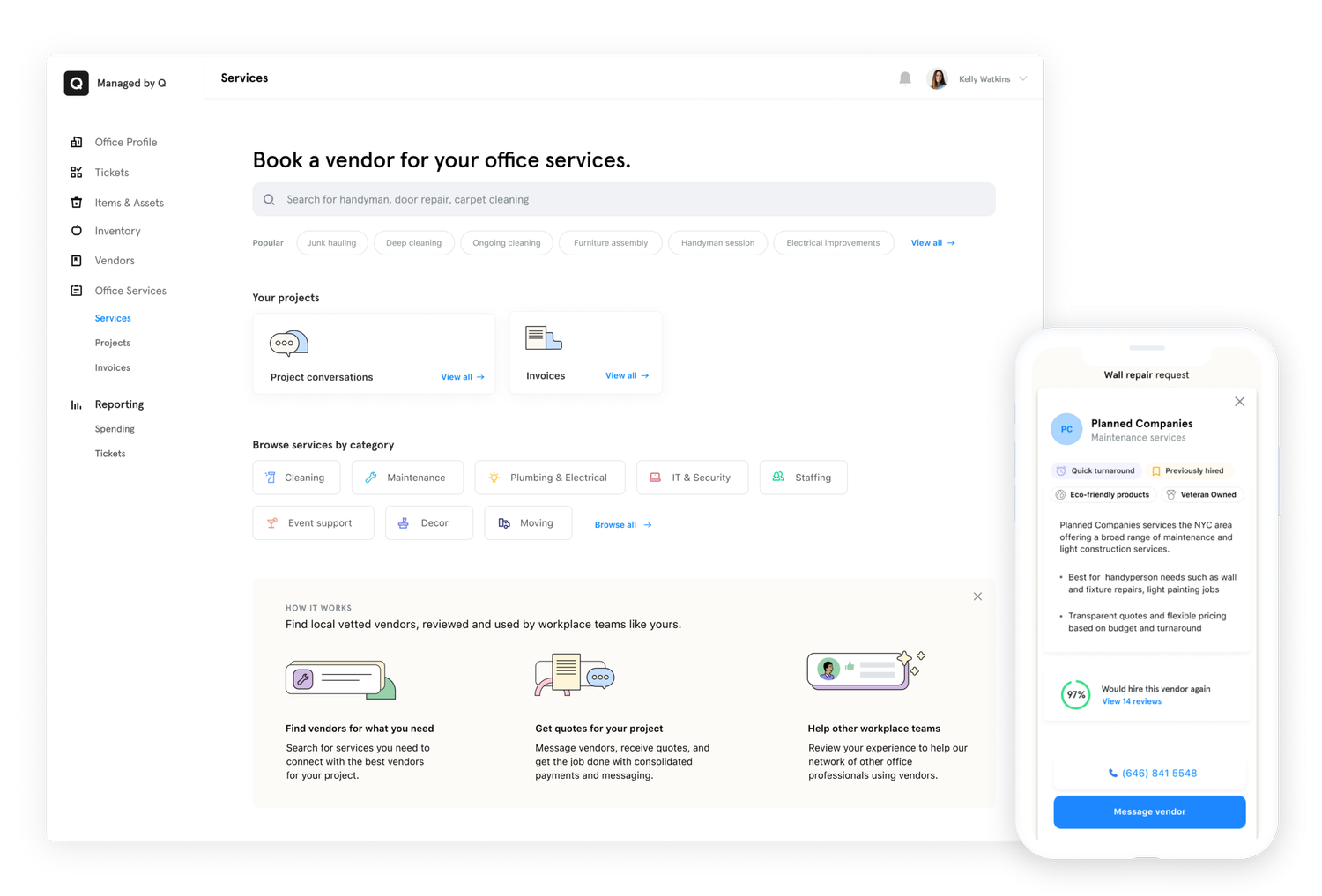
Where we started
A marketplace that used to be the whole product
Managed by Q began as office cleaning and grew into a marketplace for every office service. By 2019 we had bought a small startup and WeWork had bought us. The marketplace was turning into one feature inside a bigger SaaS tool for office managers, and a smaller team had to keep it running.
Customers felt the old model. Booking took hours at best and days on average. We kept four booking flows alive: the main one, instant booking for light maintenance, re-ordering from a past vendor, and messaging a past vendor until they sent a work order. Customers also couldn't tell what Managed by Q did in the middle.
Before · the main booking flow
- Search for a service
- Enter service details
- Enter building details
- Wait up to 1 business day
- Get matched with 1 to 3 vendors
- Message vendors, get quotes
- Approve a quote
After · one flow for everything
- Search for a service
- See available vendors
- Message one or more
- Approve quotes when ready
The bet
Show customers the vendor network and let them choose
Customer interviews pointed at two gaps. Office managers didn't know what would happen after they asked for a service, and they didn't trust a vendor they had never heard of. Self-service would only work if we fixed both. We shipped the pieces one at a time so we could watch the 11% move and change course between releases.
What we shipped
Five changes, released one by one
Vendor profiles vendors could edit
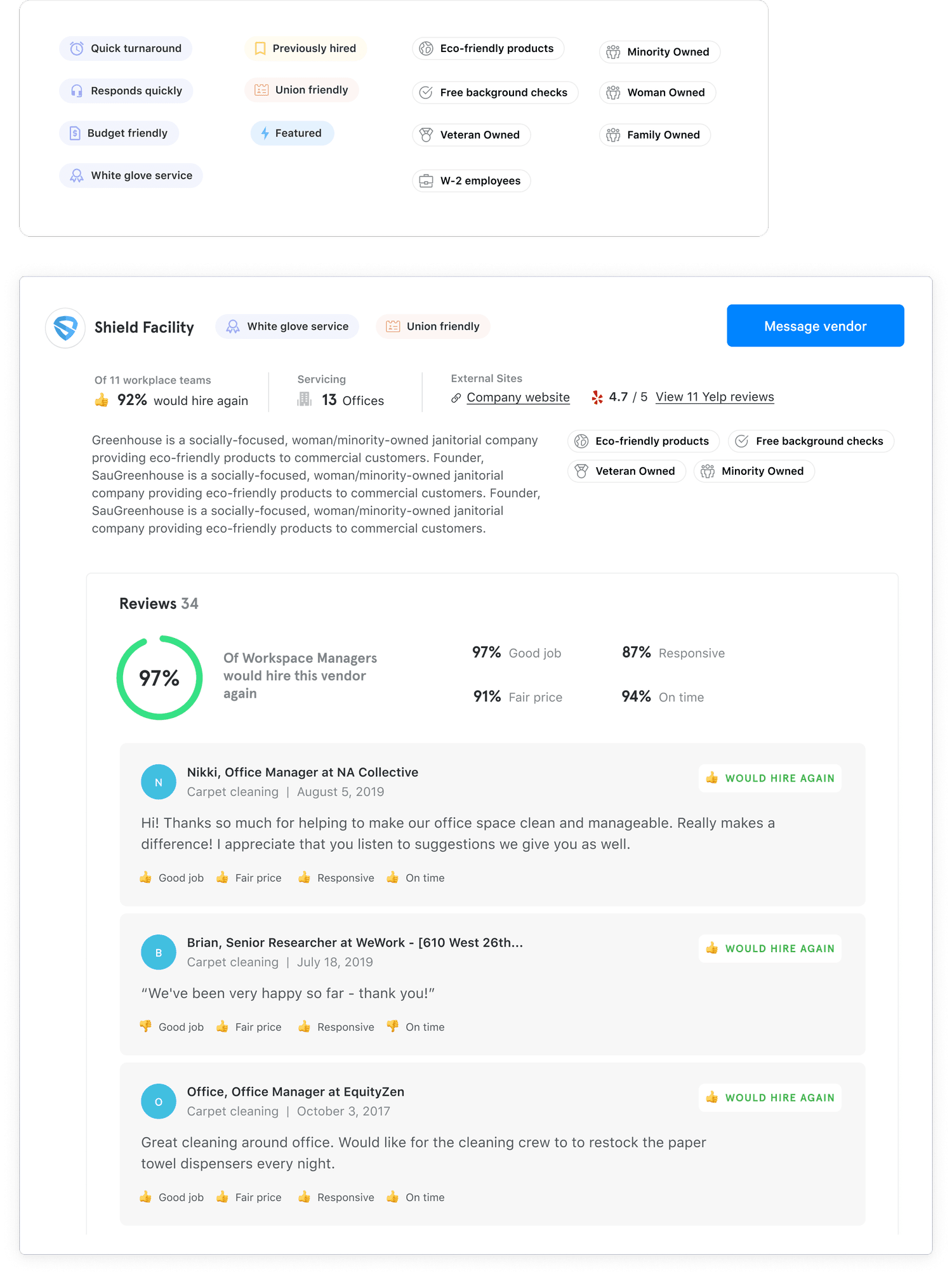
Vendors wrote their own profiles. We added standard tags like quick turnaround, union friendly and veteran owned, so two cleaners could be compared side by side.
We also pulled in Google and Yelp reviews. New vendors had no reviews with us yet, and research showed office managers were googling vendors anyway before they hired one.
Reviews up front
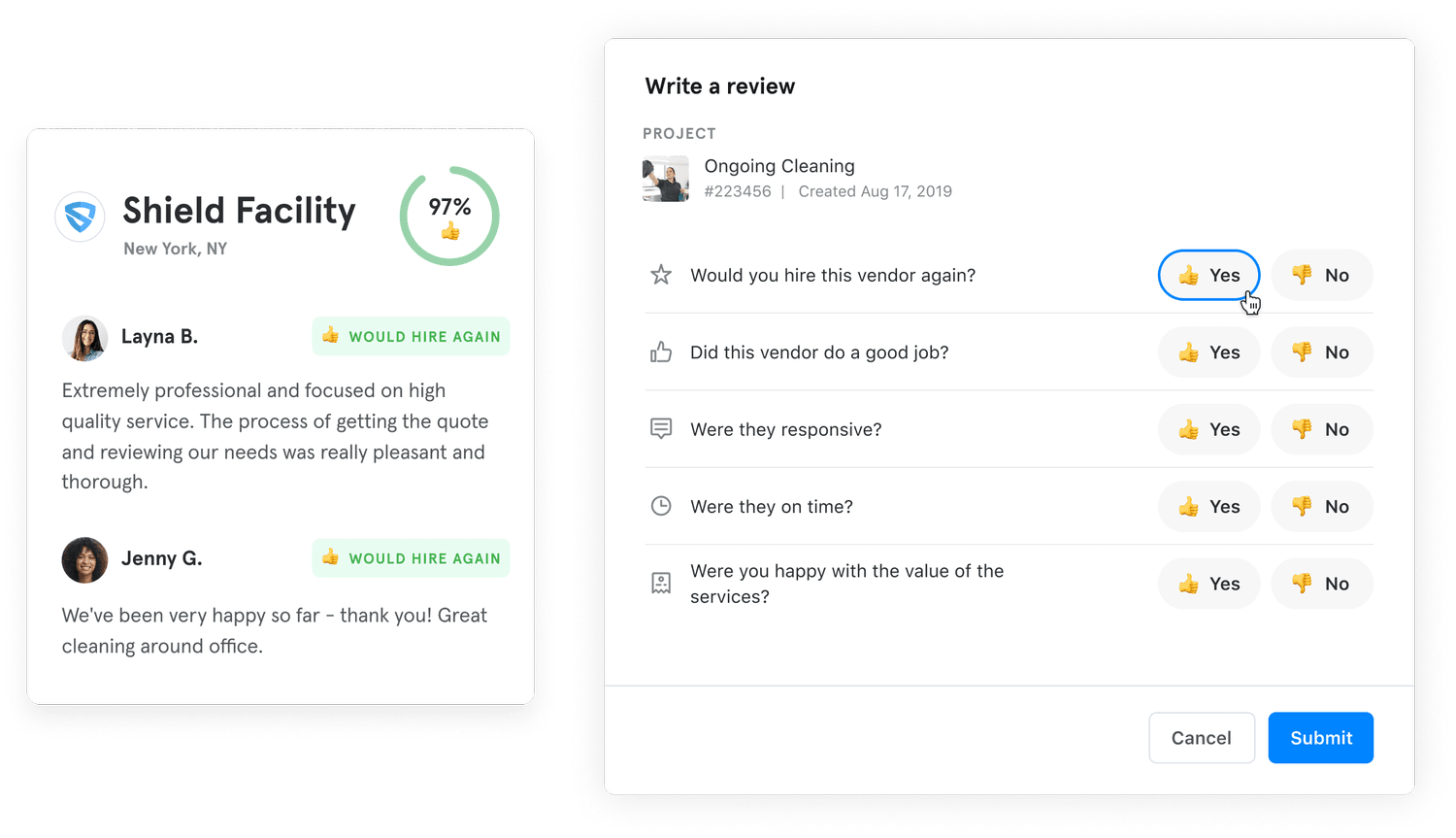
The line we heard most in research was that office managers trust other office managers. So reviews moved earlier in booking, and we made reviews easy to leave: five yes-or-no questions, starting with "Would you hire this vendor again?"
Projects built around messaging
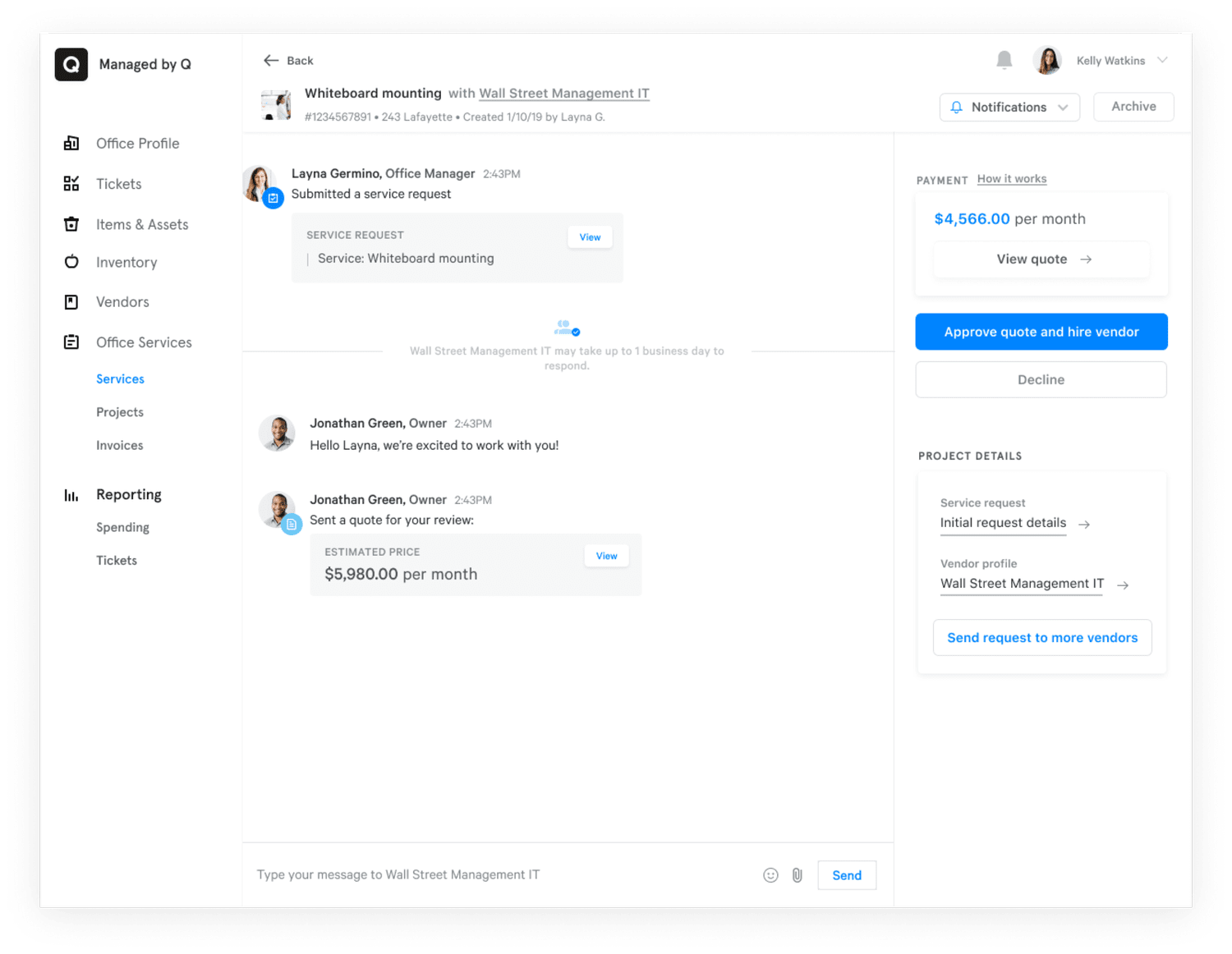
Each project page became a conversation with the vendor, with the quote and an approve button on the side. Customers talked to vendors sooner, and the web app caught up with the mobile app.
Words that describe a tool
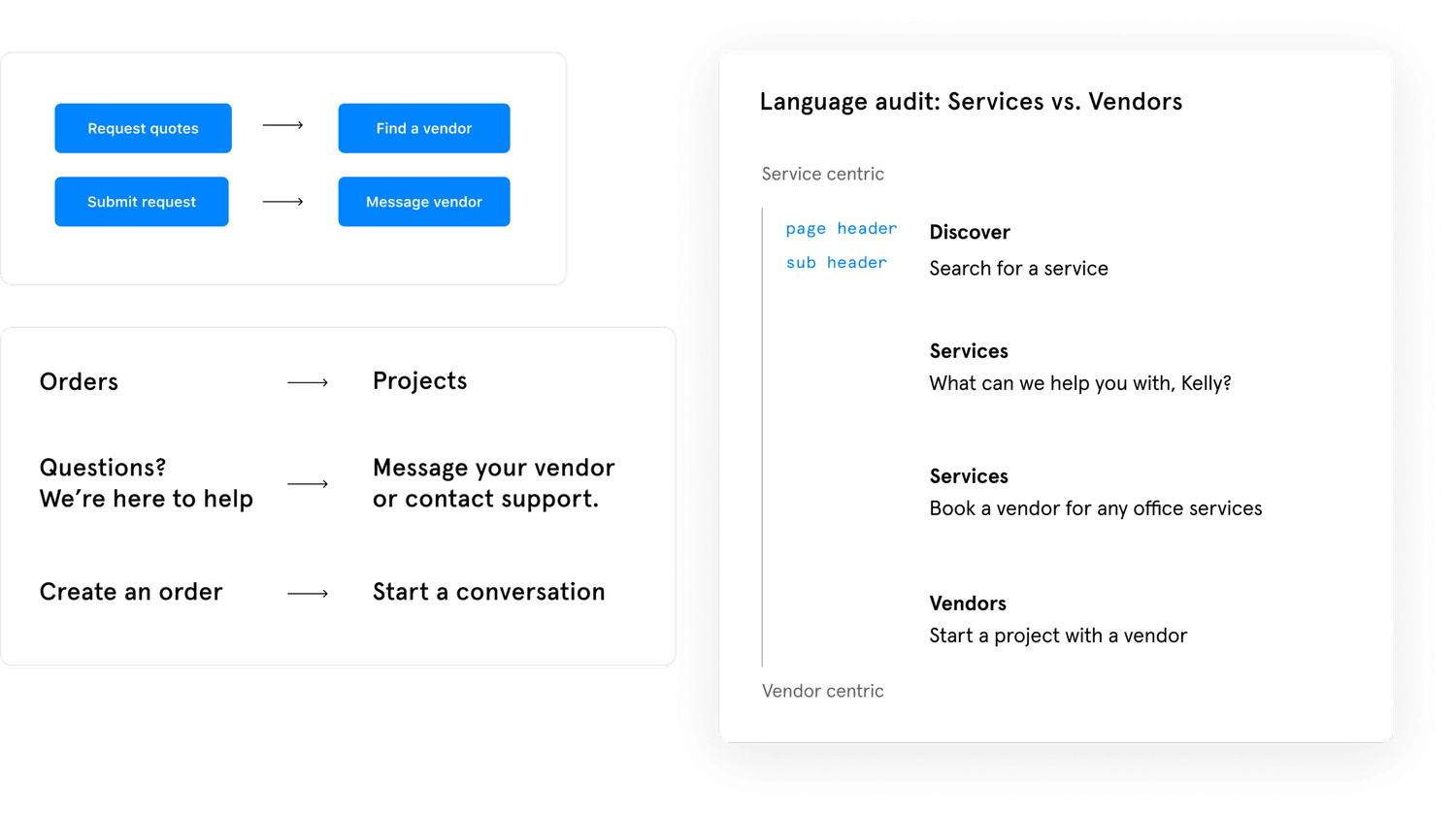
The old copy made us sound like a concierge. We rewrote the labels so customers could see they were the ones choosing.
Request quotes→ Find a vendorSubmit request→ Message vendorOrders→ ProjectsCreate an order→ Start a conversationQuestions? We're here to help→ Message your vendor or contact support
One booking flow instead of four
Instant booking, re-ordering and vendor work orders all folded into the same search, message, approve path. A smaller team now had one flow to maintain.
The hard call
Turning off the safety net
Support-assisted matching was the last piece of the concierge model. As the self-service share climbed release after release, we got the confidence to switch it off. From then on, every new project was self-service, and a smaller team no longer had to run the old model next to the new one.
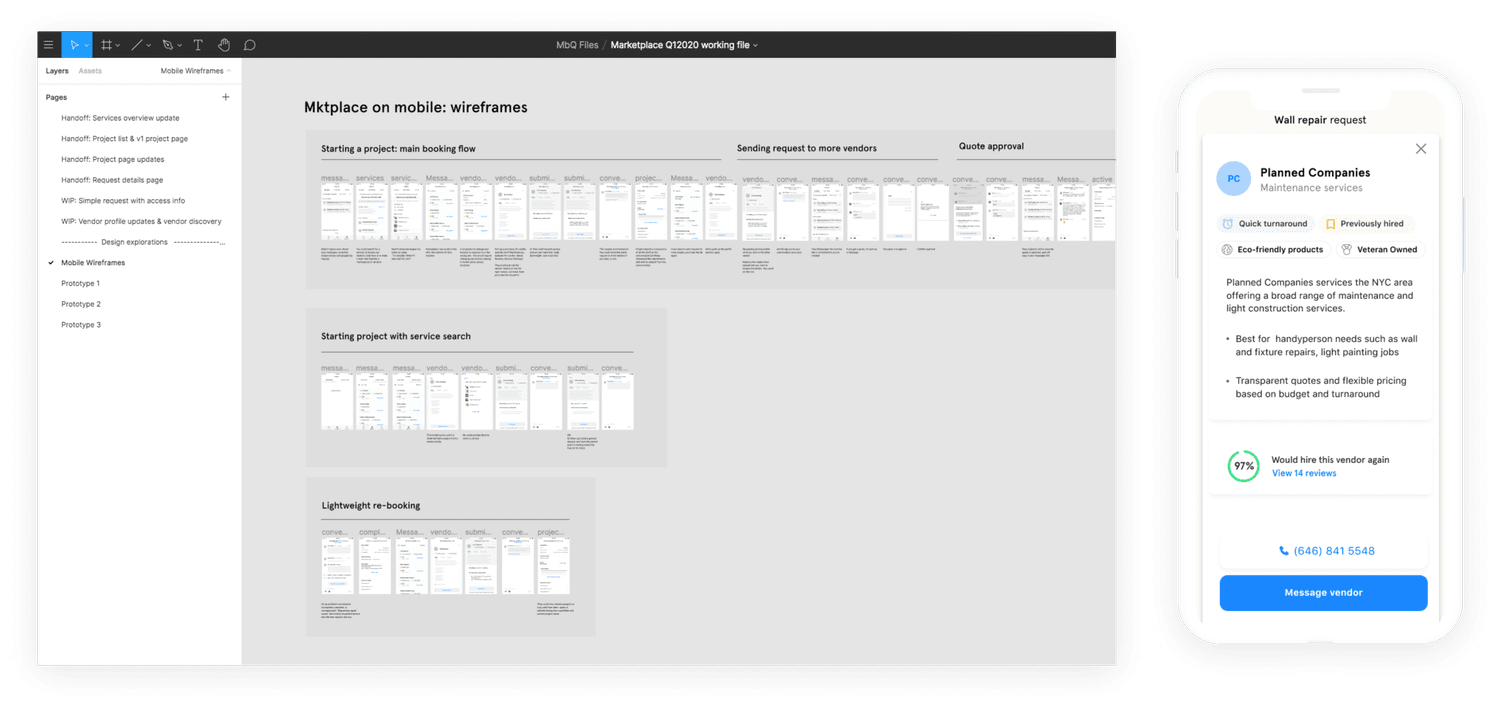
We then tested mobile concepts with customers and started tying the marketplace to the rest of the app, starting with the Vendor Directory. Users and our sales team had both asked for that.
What comes next
Agents will run the busywork, and buyers will pay for it
At Q we took the human matchmaker out by giving the buyer better tools. I think the next step takes the buyer's busywork out too. An agent will search the vendor network, message vendors, compare quotes and book, and bring the office manager in at the decision.
When an agent does that work, pricing should follow the work. At Q most of the effort came before any deal closed: matching, messaging, chasing quotes. A take rate only pays when the deal closes.
I was the product manager on this project from start to finish. Rebecca Erickson led design, and we worked with an engineering lead, two engineering squads, and partners in product marketing and marketing. Screenshots are Rebecca's, used with her permission. Her design case study is at rebeccaherickson.com.
Claude Code built this page from my notes. The story and the calls are mine.